9.4of 10
Curacao · since 2024 · BTC BNB DOGE
The condition is stable, the patient is almost perfectly healthy.
- Payout
- 1 min
- KYC
- 0 rounds
- Support
- 3 min
- Immunity
- 9.4/10
Rakeback + LossBack
Coin · USDT
Casinos that take Tether and pay it back, checked rule by rule and tested with our own money. Below: what one USDT transfer costs on each network right now, the cheapest road from your exchange to each casino, what to do when USDT does not arrive, and when Tether can freeze it.

Curacao · since 2024 · BTC BNB DOGE
The condition is stable, the patient is almost perfectly healthy.
Rakeback + LossBack
Curaçao · since 2017 · BTC BNB DOGE
Not just stable, but perfectly healthy.
Depends on the activity
Curacao · since 2017 · BTC BNB DOGE
Stable and even shows promise for a full recovery.
100% up to $1000 on the first deposit + 100 free spins · 35x wagering
Anjouan · since 2024 · BTC BNB DOGE
Stable, with a bonus allergy (Only Rakeback)
50% of the house edge on all games, 80% on Duel Originals, 100% on Duel Blackjack
Anjouan · since 2017 · BTC BNB DOGE
The condition is stable, the dosage of bonuses is excellent.
180% + 40% RakeBack
Curacao · since 2009 · BTC BNB DOGE
100% up to $300 on the first deposit, 125% within 30 minutes of sign-up, + 250 free spins · 60x wagering
USDT casinos side by side
Tested casinos only · own funds
| Casino | Score | Payout in our test | Documents asked | Support reply | Licence | USDT in our test | Review |
|---|---|---|---|---|---|---|---|
 HousebetsStable |
9.4/10 | 1 min | None | 3 min | Curacao | Yes | Review |
 StakeStable |
9.3/10 | 1 min | None | 1 min | Curaçao | Yes | Review |
 VavadaStable |
9.3/10 | 12 min | 1 round | 1 min | Curacao | Yes | Review |
 DuelStable |
9.0/10 | 2 min | None | 1 min | Anjouan | Yes | Review |
 BC.GameStable |
8.9/10 | 5 min | 1 round | 2 min | Anjouan | Yes | Review |
| MostbetStable | 8.1/10 | Pending | Pending | Pending | Curacao | Not yet | Review |
Every number comes from the casino’s chart and updates with it. “USDT in our test” means we moved USDT there ourselves. The full withdrawal log is in the lab.
USDT is one dollar on every network, but moving it is not. For example, the same transfer can cost four dollars on one network and a fraction of a cent on the next. So before you deposit at USDT casinos, look at the monitor. It reads seven networks live and then turns each fee into dollars, cheapest first.
Tether on seven networks
Pulse steady. One USDT is worth one dollar.
One USDT transfer costs right nowCheapest: Solana
What the casino charges to pay you
Read it like a chart. First, the top rows are the cheap roads, while the amber bars are Tron. Note that the Tron fee does not depend on how busy the network is. Instead, it depends on whether the receiving wallet already holds USDT. The peg reading at the top, meanwhile, is the price of one USDT. So a healthy patient reads within half a cent of one dollar.
First, we open an account like any player, deposit our own USDT, play and ask for a withdrawal. Then we time every step: when the request went in, when the casino approved it and when the coins reached our wallet. If the casino asks for documents, we count the rounds. Each withdrawal then goes into the lab log with its transaction ID on file. Also, a casino gets a score only after our own money is back. The full method.
For this page we also read every public rule the four USDT casinos publish about Tether: networks, minimums, fees, confirmations and what happens to a mistake. Where a casino publishes nothing, the tables say so instead of guessing.
USDT in numbers
BDO attestation, 30 Sep 2026
DefiLlama data, 31 Oct 2026
Our count of 307 transfers, 31 Oct 2026
BDO attestation, 30 Sep 2026
USDT is the same dollar token on every network. However, each network is a separate road with its own fee, speed and address format. The casino gives you a different deposit address for each one, and the coins only arrive if both sides use the same road.
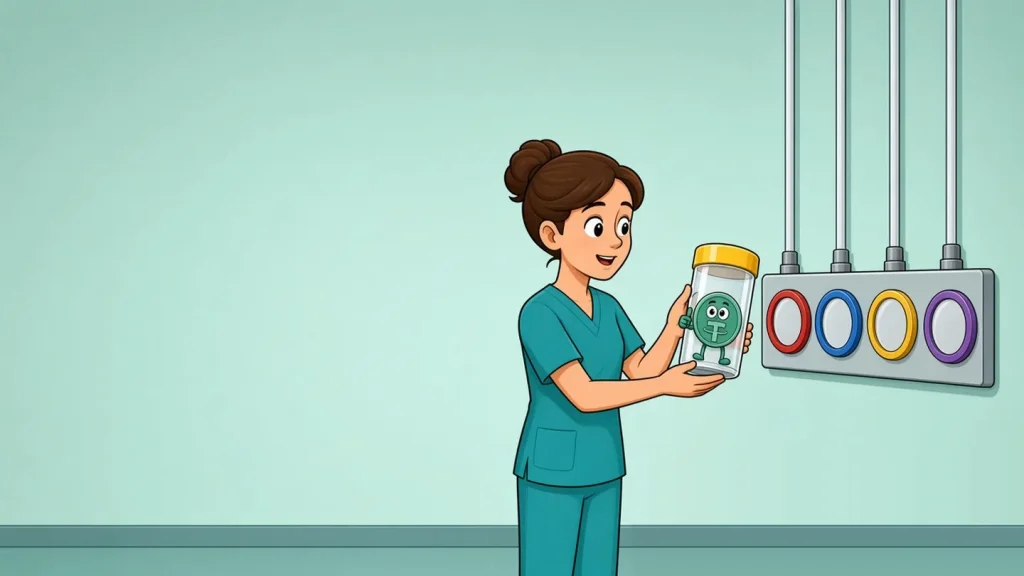
| Network | Address starts with | One transfer costs | Gas coin you need | Share of USDT |
|---|---|---|---|---|
| Tron, TRC-20 | T | About $2.00, but $4.06 to a wallet with no USDT | TRX | 51% |
| Ethereum, ERC-20 | 0x | About 1 to 4 cents now, but dollars on a busy day | ETH | 39% |
| BNB Smart Chain, BEP-20 | 0x | About 0.1 cent | BNB | 5% |
| Solana, SPL | No prefix, 32 to 44 characters | Under 0.1 cent, but about 14 cents to a new USDT account | SOL | 1.4% |
| Arbitrum, USDT0 | 0x | About 0.2 cents | ETH | 0.5% |
| Polygon, USDT0 | 0x | About 0.1 cent | POL | 0.4% |
| TON, jetton | UQ or EQ | About 0.1 cent | GRAM, which was called Toncoin until June 2026 | 0.3% |
The four USDT casinos we track agree on the big four networks, but differ on the rest. So before you pick a cheap network in your wallet, check that the casino accepts it.
| Network | Which of the four casinos take it |
|---|---|
| Tron, Ethereum, BNB Smart Chain, Polygon | All four, so BNB Smart Chain and Polygon are cheap roads that always work |
| Solana | Duel, BC.Game and Housebets. Stake takes deposits, but its USDT withdrawal guide does not list Solana |
| Arbitrum | BC.Game, and Housebets after 12 confirmations. Stake lists it as unsupported |
| TON | Only BC.Game |
| Avalanche, Optimism, Base, opBNB, Celo, Plasma, Polkadot, X Layer | Only BC.Game |
Most guides still call Tron the cheapest way to move USDT. In October 2026, however, it was the most expensive of the main networks for a normal wallet: about $2 per transfer, against fractions of a cent on BNB Smart Chain, Polygon, Arbitrum, Solana and TON. Even Ethereum, once the costly one, now charges only a few cents, because its fees fell after the Fusaka upgrade. Tron is cheap only if you stake or rent energy, and few players do. Still, it is the network almost every casino supports, which is why it stays the most used.
Every one of these USDT casinos takes Tether, but each one publishes a different part of the rules. Where a casino says nothing on its public pages, the table says so. In that case, the number usually appears only in the cashier after you log in.
| Rule | Stake | Duel | BC.Game | Housebets |
|---|---|---|---|---|
| Minimum deposit | None in USDT, but deposits under $0.01 are not credited automatically, per its deposit limits | Not published | Differs by coin, so ask support | Shown in the wallet, and below it a deposit “is not credited automatically”, per its help |
| Minimum withdrawal | 2.5 USDT | Shown in the cashier when you withdraw | Not published | Shown in the wallet before you confirm |
| Withdrawal fee | 1 USDT, the same on every network | Duel says it does “not profit” from fees, but you cover network fees | Section 11.7: shown before you confirm | Shown in the wallet, but its help warns that a hidden fee field is not a promise the transfer is free |
| Confirmations before a deposit counts | Not published | Not published | 6 for USDT, per its confirmations table | 1, or 12 on Arbitrum |
| Play before you withdraw | Wager the deposit once, per section 8.10 of its terms | No published rule | Section 10.3: the account must not be used as a bank, so unplayed deposits can be reviewed | Wager the deposit once, weighted by game, per its coin mixing policy |
The second half of the rules decides what happens when something goes wrong, and whether the casino looks at where your USDT came from.
| Rule | Stake | Duel | BC.Game | Housebets |
|---|---|---|---|---|
| USDT sent on the wrong network | “Will not be credited” | “Will not reimburse” | “You might lose your funds” | Support “can assess what is possible”, but with no promise |
| Wallet screening | Every deposit and withdrawal runs through Chainalysis, per its AML policy | Monitoring in its terms, but no tool named | Section 9.6: blockchain analytics may be used | Every address is screened on every deposit and withdrawal |
| Swap USDT for another coin inside | Yes, but a swap counts as a new deposit and can take up to 2 hours | Not offered | Yes | No, per its help |
First, consider the play rule. At Stake and Housebets, a deposit you withdraw without betting is refused, because both call that coin mixing. So bet the deposit through once before you cash out. At Housebets, the 1x is also weighted by game: sports count 100%, slots 88 to 92% and blackjack only 25%, per its help. In other words, clearing a 100 USDT deposit on blackjack takes 400 USDT of bets.
Second, consider the confirmations. Housebets credits USDT after one block, so it arrives in seconds on Tron, BNB Smart Chain or Solana. BC.Game waits for six, which still takes under a minute on Tron and Solana. Finally, the swap. At Stake a swap counts as a new deposit, so the swapped coins need a full bet-through again before you can withdraw them.
Strictly speaking, on Tron you do not pay a fee in the usual sense. Instead, every USDT transfer uses two resources: bandwidth for the bytes and energy for running the USDT contract. If your wallet has neither, it burns TRX to cover them. As a result, the price depends on how much energy one transfer needs, and on Tron that number is surprisingly large.
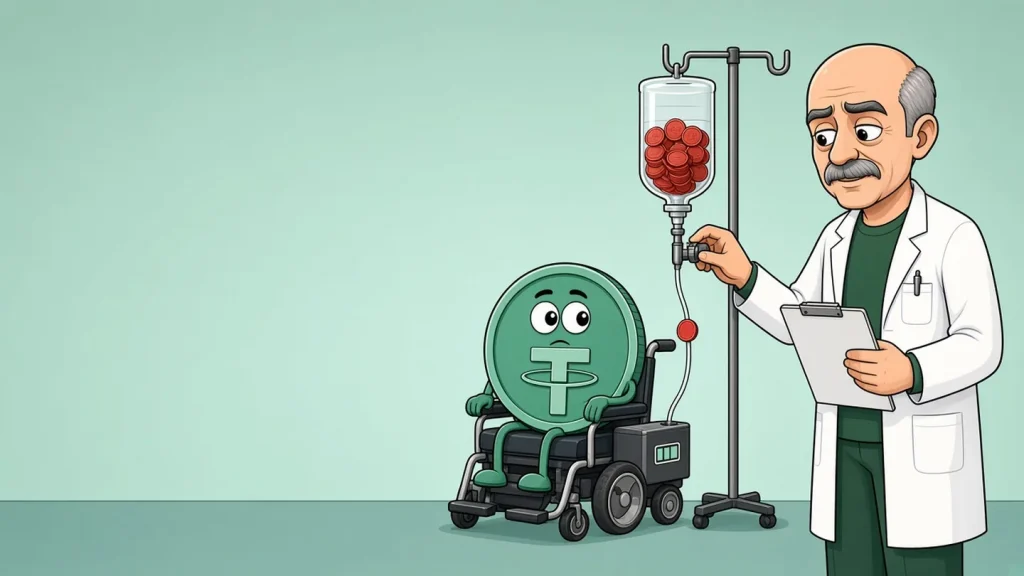
To find out, we counted every USDT transfer in four Tron blocks on 31 October 2026, 307 in all. In 251 of them the receiver already held USDT, and each used exactly 64,285 energy. In contrast, in the other 56 the receiver held none, so each used 130,285. Most of that is a surcharge: Tron adds extra energy for heavily used contracts, and USDT is the most used of all. At the current price of 100 sun, that is 0.0001 TRX per energy unit, so here is the bill.
| Case | TRX burned | In dollars |
|---|---|---|
| To a wallet that holds USDT, free bandwidth left | 6.43 TRX | About $2.00 |
| To a wallet that holds USDT, no free bandwidth | 6.77 TRX | About $2.11 |
| To a wallet with no USDT, free bandwidth left | 13.03 TRX | About $4.06 |
| To a wallet with no USDT, no free bandwidth | 13.37 TRX | About $4.17 |
Bandwidth, on the other hand, is the small part. One USDT transfer is about 345 bytes, and every activated Tron account gets 600 free bandwidth a day, per the Tron resource model. So the first transfer of the day uses the free allowance, while a second one burns 0.345 TRX more.
| Way | Cost of one USDT transfer | Catch |
|---|---|---|
| Burn TRX | About 6.4 TRX, or $2 | None, so most wallets do this by default |
| Rent energy | About 2.3 TRX, or 70 cents, on 31 October 2026 | You need a rental service, while the price moves daily, per TronRelic market data |
| Stake TRX for energy | Free once staked | You need thousands of TRX locked, then 14 days to unstake, per the staking docs |
For a player who deposits a few times a month, burning is simplest, while renting saves about two thirds. Staking, in contrast, pays off only for heavy senders. On top of that, the energy price itself has fallen. It was 420 sun until September 2024, then 210 sun, and since proposal 104 in August 2025 it is 100 sun. For comparison, at 420 sun the same 64,285 energy would cost 27 TRX.
Meanwhile, here is the trap that catches new players. You withdraw from one of the USDT casinos to your own Tron wallet, and it arrives fine, because the casino paid the energy. Then you try to send it on, and the wallet refuses, because you hold no TRX. The same goes for every network: USDT on BNB Smart Chain needs BNB, on Polygon it needs POL, and so on. So keep a small reserve of the gas coin in every wallet you use. About 15 TRX covers two Tron transfers, while a dollar of BNB, POL or SOL lasts for hundreds.
Most players buy USDT on an exchange and then send it straight to USDT casinos. In that case, the network fee does not matter, because the exchange charges its own flat fee instead. On the cheap networks, that fee is often a hundred times the real network cost. On Tron, by contrast, it is a little below what a wallet burns.
| Network | Binance | OKX | Bybit | Kraken |
|---|---|---|---|---|
| Tron | 1.5 | 1.5 | 1.3 | 1 |
| Ethereum | 0.6 | 0.36 | 0.8 | 0.65 |
| BNB Smart Chain | 0.01 | Not offered | 0.15 | Not offered |
| Solana | 0.3 | 0.27 | 0.5 | 0.98 |
| Polygon | 0.03 | 0.011 | 0.07 | 1 |
| Arbitrum | 0.3 | 0.0029 | 0.1 | 1 |
| TON | 0.3, memo needed | 0.021 | 0.15 | 0.1 |
When you match the two tables, the answer is different for every pair. Tron, the default in most wallets, is the most expensive road at every exchange here, or tied for it.
| From | To Stake or Duel | To BC.Game | To Housebets |
|---|---|---|---|
| Binance | BNB Smart Chain, 0.01 | BNB Smart Chain, 0.01 | BNB Smart Chain, 0.01 |
| OKX | Polygon, 0.011 | Arbitrum, 0.0029 | Arbitrum, 0.0029 |
| Bybit | Polygon, 0.07 | Polygon, 0.07 | Polygon, 0.07 |
| Kraken | Ethereum, 0.65 | TON, 0.1 | Ethereum, 0.65 |
After all, a flat fee is the same slice of a small deposit and a big one. So here is a full round trip at Stake: send USDT from Binance, then withdraw it back. The only difference between the two columns is the network you picked.
| Amount | On Tron: 1.5 in, 1 out | On BNB Smart Chain: 0.01 in, 1 out |
|---|---|---|
| $20 | 2.5 USDT, or 12.5% | 1.01 USDT, or 5% |
| $50 | 2.5 USDT, or 5% | 1.01 USDT, or 2% |
| $100 | 2.5 USDT, or 2.5% | 1.01 USDT, or 1% |
| $500 | 2.5 USDT, or 0.5% | 1.01 USDT, or 0.2% |
In short, at $100 or less the network you pick changes the round trip by more than 1% of your money. Above $500 it hardly matters.
Normally, the network moves USDT in seconds or minutes. When a withdrawal takes hours, therefore, the casino is holding it, not the blockchain. The usual reasons:
In our tests, the USDT casinos that passed paid in minutes. Housebets, for instance, says its withdrawals are paid automatically as soon as you submit them. Also, exact times for each casino are in the table above and in the lab. If yours has been pending for more than a day with no reason given, tell us.
Fortunately, most missing deposits at USDT casinos are not lost. Instead, the coins usually sit on the chain where you sent them, and the fix depends on what went wrong. So start with the transaction ID and look it up on the explorer for that network: Tronscan for Tron, Etherscan for Ethereum, BscScan for BNB Smart Chain.
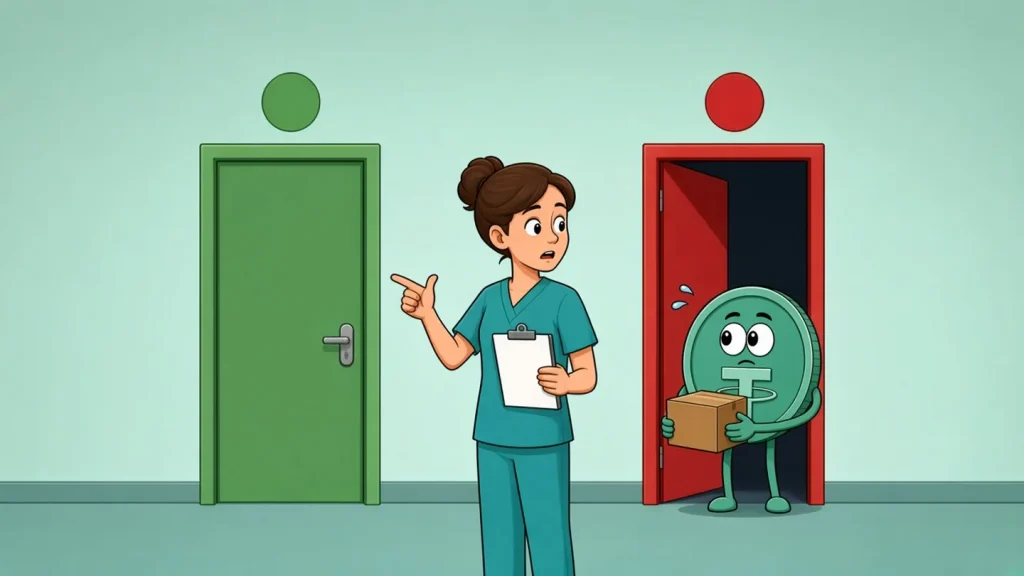
| Symptom | Cause | Treatment |
|---|---|---|
| The explorer shows success, but the casino balance is empty | Not enough confirmations yet, unless the casino is just slow to credit | Wait for the casino’s count, six at BC.Game, because BC.Game says a deposit can take up to 2 hours. Then send the transaction ID to support |
| The explorer shows success to the right address, but on another 0x network | Wrong network on an address that exists on several chains | Contact support at once with the ID, since recovery is up to the casino. Stake and Duel say no, while Housebets reviews each case with no promise |
| The deposit was below the minimum | Casinos ignore small transfers | Do not send a second transfer to “push” it. Instead, ask support first, because Housebets, for example, checks such cases one by one |
Sometimes the coins never left, or they left for a place that does not watch them.
| Symptom | Cause | Treatment |
|---|---|---|
| The wallet will not send at all | No gas coin, usually no TRX on Tron | Add a few TRX, or the gas coin of that network, then try again |
| Sent to an exchange on TON without the memo | TON exchanges use one shared address and sort deposits by memo, per Wallet’s guide | File a recovery request with the exchange, although some charge for it |
| Withdrew to an exchange that does not support the network | The exchange does not watch that chain | Ask the exchange, but BC.Game warns that a return “is not guaranteed”, per its withdrawal guide |
| Your wallet shows a “USDT” you did not expect | A fake token or a poisoning transfer | Do not touch it, because it is bait. See the scams section below |
Yes, because USDT is not like Bitcoin. On Tron and Ethereum, the USDT contract has a blacklist that Tether controls. A blacklisted address cannot send USDT anywhere, and Tether can later destroy the frozen balance. Surprisingly, the address can still receive. So a frozen wallet keeps filling up, but nothing ever leaves it.
| Network | Who can freeze | How |
|---|---|---|
| Tron | Tether | Blacklist in the USDT contract |
| Ethereum | Tether | Blacklist in the USDT contract |
| Solana | Tether | Freeze authority on the USDT mint |
| TON | Tether | The admin can lock a USDT wallet, move or burn its tokens |
| BNB Smart Chain | Not Tether, because this USDT is Binance-Peg, issued by Binance | The contract has no blacklist, but whether Binance can block it some other way is not public |
| Polygon, Arbitrum | Unclear, since this USDT is USDT0, a bridged version | We could not confirm a freeze function |
In fact, Tether uses this power a lot. For example, as of 7 October 2026, blacklisted addresses held $3.38 billion of USDT on Tron and $857 million on Ethereum, per DIA Data. Then, on 29 October, Tether froze nearly $1.57 billion linked to the Binance security incident, per Reuters. Earlier, in April, it froze $344 million in two Tron wallets that US authorities linked to the Central Bank of Iran, per Tether.
Because USDT moves fast and cannot be reversed, it draws the most scams of any coin. Three of them hit gamblers often, but each one has a simple defence.
First, a scammer creates an address that starts and ends like one you use, for example your casino deposit address. Then they send you a zero or tiny transfer from it, so it shows up in your history. So the next time you copy an address from that history, you copy theirs. On Tron, the scale is huge: in January to August 2026, 30% of all transfers were potential dust, and 60% of active wallets that received funds were hit, per TRM Labs. Worse still, one victim in December 2025 lost almost 50 million USDT this way, 26 minutes after a $50 test, per Blockaid.
Still, the defence is simple. Never copy an address from your transaction history. Instead, copy it fresh from the casino cashier every time, and check the middle characters too, not just the ends.
Unfortunately, anyone can create a token and call it USDT. Usually, fake ones turn up as airdrops, or as “payment” from a P2P seller. However, real USDT on Tron has only one contract address: TR7NHqjeKQxGTCi8q8ZY4pL8otSzgjLj6t. So if a token in your wallet has a different contract, it is worthless, and any site that asks you to “approve” or “claim” it wants your real coins.
Here, a fake casino shows a big balance, then demands a “tax” or “fee” in USDT before it pays. The FBI describes this exact pattern on its investment fraud page: “This is a trap.” In contrast, a real casino takes its fee from the withdrawal itself, so it never asks you to send more first.
USDT is a promise from Tether to redeem each token for one dollar. To back it, Tether publishes a reserves report every quarter, checked by the accounting firm BDO. Most recently, on 30 September 2026, it reported $191.45 billion in assets against $183.50 billion in liabilities, a buffer of $7.95 billion, per Tether. About 73% of the reserves were cash, US Treasury bills and similar, almost 10% precious metals and over 4% Bitcoin.
| Date | What happened | Lowest price |
|---|---|---|
| 15 Oct 2018 | Doubts about Tether’s banking | About $0.925 on average, but lower on single exchanges |
| 12 May 2022 | The TerraUSD collapse | About $0.95 on some exchanges, then back to $0.998 the same day |
| 2025 and 2026 | Nothing comparable | We found no drop below $0.99 |
Still, an attestation is a snapshot on one date, not a full audit. For a balance at USDT casinos that you move in and out within days, that risk is small. For long term savings, think twice.
| USDT | USDC | Bitcoin | Litecoin | |
|---|---|---|---|---|
| Price while you play | Stays at $1 | Stays at $1 | Moves every minute | Also moves every minute |
| Can the issuer freeze it | Yes, Tether | Yes, Circle | No | No |
| Cheapest network | BNB Smart Chain, Polygon, Solana | Solana, Base, Polygon | Bitcoin only, so cents to dollars | Litecoin, under 1 cent |
| Speed | Seconds to minutes | Seconds to minutes | 10 minutes to an hour | About 15 minutes |
| Casinos that take it | Almost all crypto casinos | Most | All | Most |
| Easy to buy in the EU | No, delisted on regulated exchanges | Yes, MiCA compliant | Yes | Yes |
Overall, stablecoins are the sensible default. Your balance does not shrink because Bitcoin dropped while you played, and your win is worth the same tomorrow. Between the two, USDT casinos are more common, while USDC is easier to get in Europe. See USD Coin casinos.
Tether is not authorised under MiCA, the EU crypto law, and the transition for stablecoin issuers ended on 1 July 2026. So regulated exchanges stopped selling it. Binance delisted USDT trading pairs for EEA users in March 2025, Kraken lists it as delisted in the EEA, per its help, and the OKX fee list for Europe has no USDT at all. Coinbase converts any USDT left in EEA accounts into USDC after 30 October 2026, per its help page. On top of that, USDT sent to a Coinbase EEA account after that date is not credited.
Holding and sending USDT from your own wallet is not banned, however. In practice, EU players either buy USDC and deposit that, or swap to USDT at a casino with a swap, such as Stake or BC.Game. Whether online casinos are legal for you is a separate question. It depends on your country, and many crypto casinos block France, Germany, Spain and the Netherlands outright.
| You see | What it means |
|---|---|
| “Pay a fee to unlock your withdrawal” | A scam, every time, because real casinos take fees from the withdrawal itself. |
| Support asks for your seed phrase or private key | No one needs it, so close the chat. |
| Only Tron in the cashier | Not a scam by itself, but every deposit costs you $2 more than it should. |
| “Instant” withdrawals that sit pending for days with no transaction ID | The blockchain is not the problem, because nothing was sent. |
| A token called USDT with a different contract address | Worthless, since real Tron USDT is TR7NHqjeKQxGTCi8q8ZY4pL8otSzgjLj6t. |
| No licence number and no company name in the footer | When it stops paying, there is no one to complain to. More cases in how online casinos scam players. |
This is the routine we follow with our own Tether. None of it needs luck, and it takes a minute.
A USDT casino is an online casino that takes deposits and pays out in Tether (USDT), a stablecoin worth one US dollar. Your balance stays in dollars while you play. Stake, Duel, BC.Game and Housebets all accept USDT on Tron, Ethereum, BNB Smart Chain and Polygon.
For cost, BNB Smart Chain, Polygon or Solana, where a transfer costs a fraction of a cent. For support, Tron, which costs about $2 per transfer. From an exchange, its fee decides: Binance charges 0.01 USDT on BNB Smart Chain and 1.5 on Tron.
No. In October 2026 a TRC-20 transfer used 64,285 energy, about 6.4 TRX or $2 if you burn TRX, and twice that to a wallet with no USDT. BNB Smart Chain, Polygon, Arbitrum, Solana and TON cost fractions of a cent. Tron is cheap only with rented or staked energy.
USDT is backed by reserves that Tether reports every quarter, checked by the accounting firm BDO. On 30 September 2026 its assets exceeded its liabilities by $7.95 billion, with about 73% in cash, Treasury bills and similar. It is an attestation, not a full audit.
The network itself takes seconds to a few minutes. In our tests, the USDT casinos that passed paid in minutes, and Housebets pays automatically on request. When a withdrawal takes hours, the casino is reviewing it.
More coins and lists: TRON casinos, USD Coin casinos, Bitcoin casinos, Solana casinos, BNB casinos, fast payout casinos, light KYC casinos, and the full charts of Stake, Duel, BC.Game and Housebets.
↑↓ moveEnter open chart